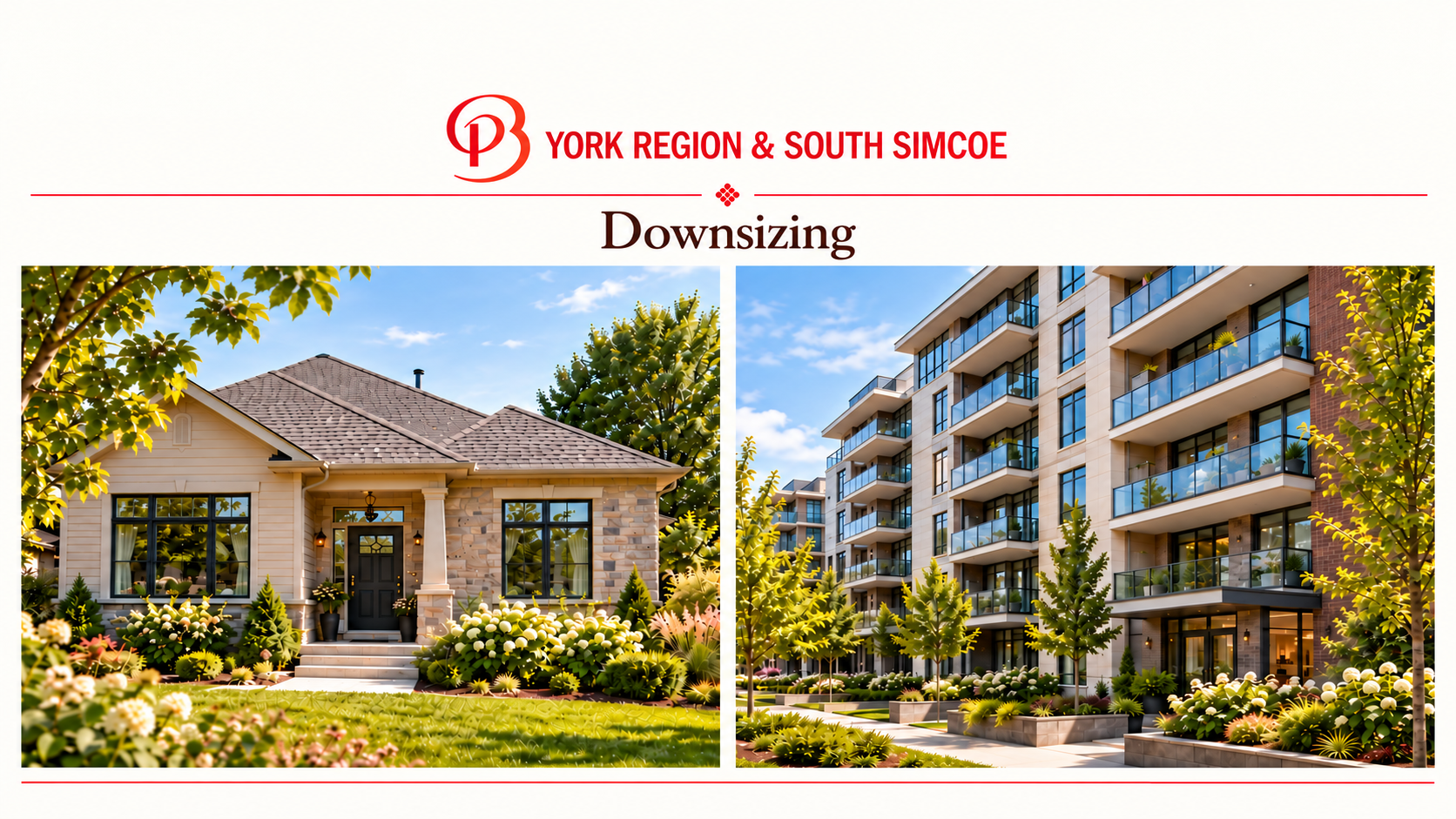
Should I Downsize to a Smaller Detached Home or a Condo in York Region and South Simcoe?
Short answer: A smaller detached home and a condo can suit different downsizing priorities. A smaller detached home may be worth comparing when privacy, outdoor space, parking, and direct control over the property matter to your routine. A condo may be worth comparing when a shared-property structure and a different arrangement for some exterior responsibilities matter more. The useful comparison is how each specific property supports an ordinary week.
For downsizers in York Region and South Simcoe, the decision is not simply “house versus condo.” It is a comparison between different kinds of responsibility. A smaller detached home may reduce space without changing the feeling of privacy and independence. A condo may reduce some exterior responsibilities while introducing fees, rules, shared ownership, and documents that need to be understood before a decision is made.
What Does a Smaller Detached Home Change for a Downsizer?
A smaller detached home may be worth comparing if you value a private entrance, yard, driveway, storage, or the ability to use the property without shared-building rules. It can preserve familiar patterns, such as parking close to the entrance, hosting family, keeping outdoor belongings, or having a separate room for hobbies and visitors.
That does not mean the home will be low maintenance. You may still need to understand the driveway, roof, exterior, yard, snow, seasonal work, and service arrangements connected with the specific property. These are questions to confirm rather than assumptions to make from the listing description.
What Does a Condo Change for a Downsizer?
A condo may be worth comparing if reducing some exterior tasks, having shared amenities, or living closer to established services matters more to your weekly routine than having a private lot. It may also appeal if you prefer a home where certain common elements are managed through a condominium corporation rather than handled entirely by one household.
However, “low maintenance” does not mean “no responsibilities.” Before relying on that description, review the specific condominium documents, fees, rules, inclusions, exclusions, and responsibilities. The Condo Authority of Ontario’s Condo Buyers’ Guide, its information about common expenses, and its status-certificate guidance can help identify questions to confirm. These sources do not replace property-specific review or qualified legal, financial, insurance, and other professional advice.
How Do the Responsibilities Compare?
| Routine question | Smaller detached home | Condo |
|---|---|---|
| Arrival and parking | How close is parking to the entrance, and what exterior work may be involved? | What parking, visitor, access, and shared-entry arrangements apply? |
| Outdoor space | What yard, pathway, seasonal, or exterior responsibilities remain? | What outdoor areas are private, shared, included, or restricted? |
| Storage | Does the home provide enough storage without creating new maintenance demands? | What locker, parking, storage, and use rules apply? |
| Privacy and visitors | Does the layout support quiet time, family visits, and hobbies? | How do shared walls, common areas, rules, and visitor arrangements affect the routine? |
| Ownership questions | What property-specific conditions and responsibilities need confirmation? | What fees, documents, rules, exclusions, and common-element responsibilities need review? |
When comparing costs, do not treat a condo fee as a simple substitute for every detached-home expense or task. Purchase price, fees, utilities, maintenance, insurance, taxes, repairs, services, and responsibilities can differ by the specific property and ownership structure. Compare the actual information and seek qualified financial, legal, insurance, and property-specific advice before treating either option as lower cost.
How Does Location Change the Decision in York Region and South Simcoe?
In York Region and South Simcoe, compare home type and location together. A smaller detached home in one community and a condo in another can create different patterns for parking, outdoor work, visitor access, driving, and the places you use regularly. Use the Communities hub to investigate the areas relevant to your routine, then use the Market Reports hub for dated information segmented by municipality, property type, and reporting period. Market information is planning context—not a valuation, forecast, or guarantee.
When reviewing local market information, compare bungalows and other main-floor-living options with the relevant municipality, property type, price range, condition, and reporting period. A broad regional average may not describe the homes you are considering.
How Can I Compare Actual Homes Instead of Labels?
Start with the routine you want to protect. Compare the arrival, movement, storage, outdoor work, parking, privacy, ownership responsibilities, and location of each home. The condo-alternatives article and low-maintenance guide provide related decision questions. You can also use the Downsizer Decision Kit and request a 15-Minute Right-Sizing Conversation to organize the comparison around your actual priorities.
Frequently Asked Questions
Is a smaller detached home always more work than a condo?
No. The work depends on the property, services, lot, condition, ownership arrangement, and responsibilities that apply. A detached home may involve more direct exterior work, while a condo may involve fees, rules, shared responsibilities, and documents that need review.
Is a condo cheaper than a smaller detached home?
Not necessarily. Purchase price, fees, utilities, maintenance, insurance, taxes, repairs, services, and responsibilities can differ by the specific home and ownership structure. Compare the actual property information and seek qualified financial, legal, insurance, and property-specific advice before treating either option as lower cost.
Do condo fees cover snow removal, landscaping, and exterior repairs?
That depends on the condominium corporation, documents, fee structure, exclusions, and the specific property. Do not assume that every fee covers the same responsibilities. Review the relevant documents and confirm the details with the appropriate professionals.
Can I keep a yard when I downsize?
Possibly. A smaller detached home, condo townhouse, or another home type may provide private or shared outdoor space. Compare the size, access, responsibilities, rules, and the amount of outdoor work that fits your routine.
What condo documents should I review in Ontario?
Questions may include the condominium corporation’s rules, fees, inclusions, exclusions, financial information, and status-certificate material. The Condo Authority of Ontario Condo Buyers’ Guide and its status-certificate guidance are useful starting points. This article does not interpret documents; obtain qualified legal and other professional advice for your situation.
Is a condo townhouse different from a freehold townhome?
They can involve different ownership structures, responsibilities, fees, rules, and shared elements. Do not rely on the label alone. Confirm the specific ownership arrangement and documents for the property you are considering with the appropriate professionals.
Should I sell my house before choosing a condo or smaller detached home?
There is no single sequence that fits every household. The useful questions include your preferred timing, property search, current-home preparation, local options, and the legal and financial advice relevant to your circumstances. Discuss those parts with the appropriate professionals before making a decision.
Where can I find current local data for detached homes and condos?
Use the Market Reports hub and check the municipality, property type, reporting period, definitions, and limitations. A broad regional figure may not describe the specific detached home or condo you are comparing.
How should I compare two actual homes?
Use the same routine questions for every property and write down what you observed, what you still need to confirm, and what would change your decision. Comparing two homes through the same routine lens can be more useful than relying on the label “house” or “condo.”
Professional boundary: This article is a decision framework, not a property inspection, accessibility assessment, legal or financial opinion, insurance determination, or condominium-document interpretation. Confirm property-specific questions with the appropriate qualified professionals.
Reviewed September 13, 2026. Content is intended for general information about comparing home types in York Region and South Simcoe. Local market information should be checked by municipality, property type, reporting period, and specific property.